PODCAST INTERVIEW
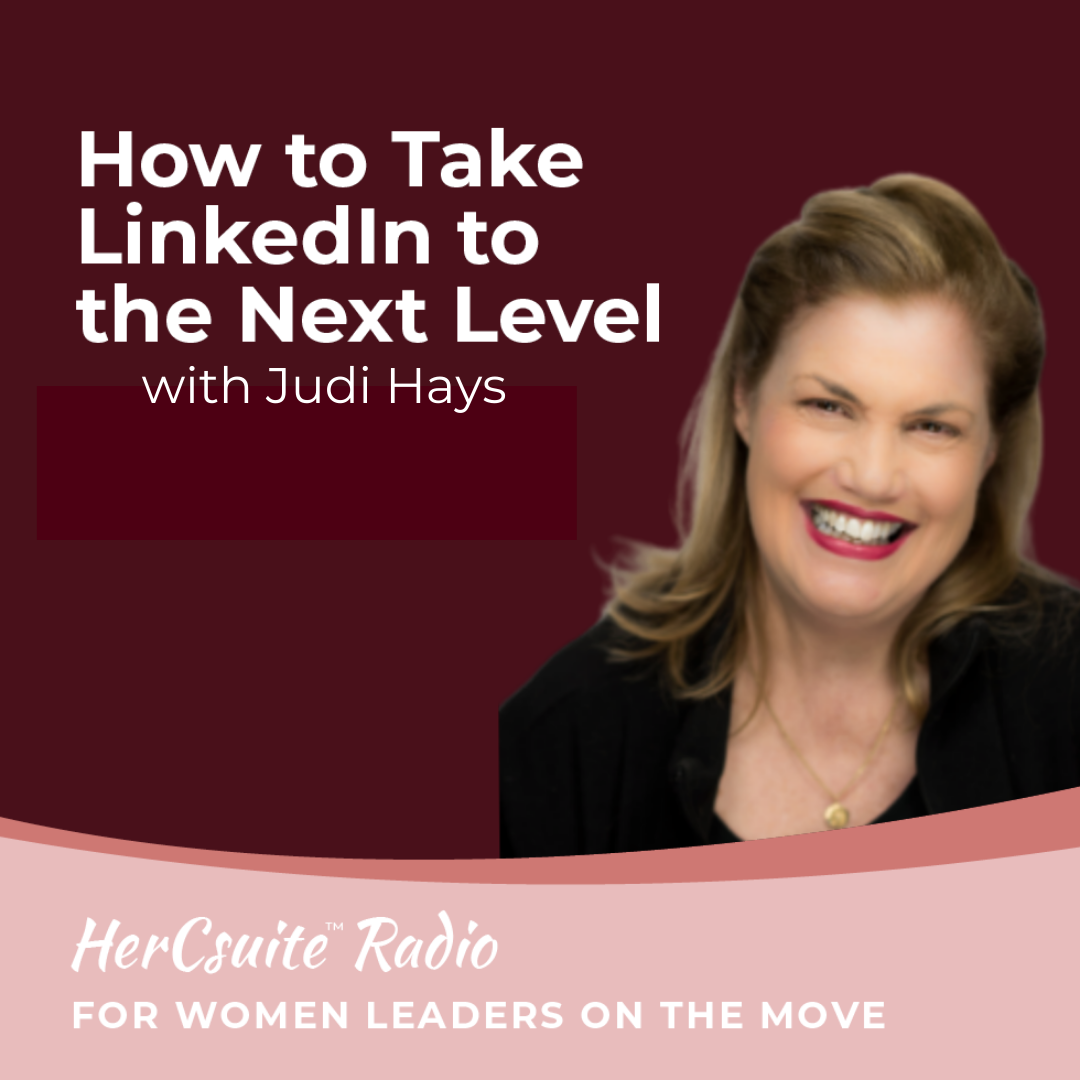
How to Take LinkedIn to the Next Level
Listen On
HerCsuite Radio with Natalie Benamou
Natalie Benamou, founder of HerCsuite and host of HerCsuite Radio, talks with Judi Hays about how women leaders can take their LinkedIn presence to the next level. Judi shares how she went from advertising in New York to building a business around LinkedIn, and how the Triple-E Method (Elevate, Expand, Engage) grew out of the work she did with clients.
They cover how to write a profile that speaks to your target audience instead of reading like a resume, why the top of your profile and the first sentence of your About section matter most, and how to build a daily LinkedIn habit. Judi closes with a simple tip: download your connection data and re-engage the people you have lost touch with.
Episode Key Takeaways
- Be specific about your audience: The more specific you are, and the better you understand what is relevant to them, the more people see themselves in what you offer and start to listen.
- Treat LinkedIn like a live networking event: Ask questions, show interest in the other person, and engage. Don't hand out business cards and run.
- Write your About section for your reader: Skip the third-person resume. Open with a first sentence that says who you are and what you do, then give your audience something useful.
- Make the top of your profile work: Your photo, banner, and headline are breadcrumbs that make people curious. Put the most important words at the start of your headline for mobile readers.
- Set a goal and a daily habit: Decide what you want LinkedIn to do for you, then spend about 15 minutes in the morning, midday, and end of day on notifications, messages, and the feed.
- Re-engage your existing network: Download your connections, filter by job title, and reach out to five people you have lost touch with.
Resources
- Elevate, Expand, Engage by Judi Hays
- Episode page on HerCsuite
- HerCsuite, Natalie Benamou's women's leadership network
Listen Now
Appearances By

Natalie Benamou
Natalie Benamou is the founder of HerCsuite®, a women's leadership network that helps women advance in their careers and helps companies retain and engage their female talent. She hosts the podcast that aired this episode as HerCsuite Radio and is now called Women Leaders on the Move. Learn more about Natalie Benamou.
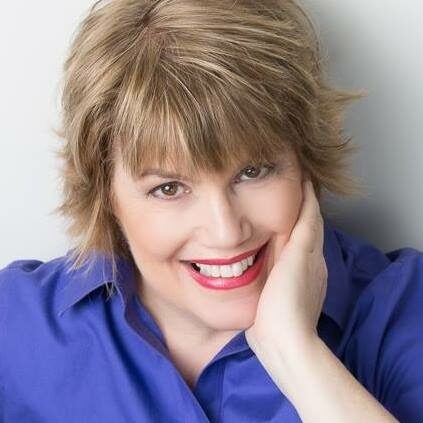
Judi Hays
Judi Hays is a personal brand strategist, executive positioning advisor, and LinkedIn expert. She positions experienced professionals and leaders of established, expert-led B2B consulting and professional-services firms for visibility, authority, and decision-maker conversations. Learn more about Judi Hays.
Show Transcript
This transcript was generated from the episode audio and lightly edited to remove filler words and obvious repetitions. It may contain transcription errors.
Natalie Benamou:
Hello and welcome. This is your host, Natalie Benamou, creator and founder of HerCsuite, where we help women achieve success in every phase of their careers. We always strive to offer value to you, our listeners, and I know all of you are on LinkedIn, which is why I'm so excited about today's guest, Judi Hays. Judi is an author and sought-after LinkedIn expert who turns underperforming LinkedIn profiles into prospect-attracting powerhouses. She helps business executives identify their audience and elevate their LinkedIn profile and personal brand. Her new book, Elevate, Expand, Engage, is available on Amazon. We discuss so much about LinkedIn and its nuances, and at the very end I learned something I had no idea about, which is a tip about your personal profile. You're going to want to listen to the very end to get it. With that, let's get started. Judi, I am so excited to welcome you to HerCsuite Radio today. Thank you for being on the show.
Judi Hays:
I am ecstatic to be here. It's really an honor for you to invite me, so thank you. I have to give a shout-out to how we came together, because Bobbi Carlton is the ultimate connector at Innovation Women. We were on a call together on New Year's Eve day, in the morning, and that's how we connected. How wonderful to meet you that way. So, shout-out to Bobbi.
Judi Hays:
Bobbi is a rainmaker. I met her through the Forbes Council, which we're both part of, and she chairs one of the groups within it, the PR and marketing group. I was really impressed, and I wanted to know more about this Innovation Women thing. So any women listening to this, if you're not a member of Innovation Women, you are missing out on an amazing opportunity to connect with people like Natalie and Bobbi.
Natalie Benamou:
I agree. It's for meeting planners, for speakers, and for people who want to connect. We'll have a link in the show notes. Today we're going to talk about one of my favorite things, which I don't get a chance to talk about enough: LinkedIn. It's such a tool, and everyone is using it. But before we get into that, I want you to share the arc of your career and what led you to become such an expert in all things LinkedIn and in helping organizations and individuals stand out.
Judi Hays:
I started my career in advertising in New York City, back when direct mail was a thing. That was hundreds of years ago. I've always liked the idea of target marketing and being able to test things. Over the course of different jobs, on the business side, the nonprofit side, the corporate side, and the vendor side, the one where I really got interested in LinkedIn was working for the Chamber of Commerce in Austin, Texas. I was the head of communications, and I connected with all the member companies. I started to embrace LinkedIn and train them on how to use it to grow their business. That became natural, and they started asking me to give presentations.
Then I relocated back to Brooklyn, my hometown, and took a job that didn't work out after a couple of months. I decided I'm genetically unemployable. I can't work for anybody at this point. I've got to do my own thing. So I started doing different kinds of projects for people. In the beginning, I did a lot of pay-it-forward work, and it helped me build my confidence and really understand how the platform works. The secret to success is being curious. Poke around and look at how things work. People think I know a lot. I know how to Google.
The big turning point in my business was in 2019, when I formed a corporation. If you're running a business, claiming that and filing the papers, being a real business, makes it so real. I decided my focus, my niche, was going to be LinkedIn, because I'm a marketer. I'm a digital marketer, a social media marketer, and a LinkedIn expert. The more I whittle that down, the more specialized I become, and the easier it is for people who want to work with me to know what they're getting. But it doesn't mean I have to eliminate all the other stuff. I say LinkedIn is the gateway drug. For my clients, I run their websites, their email campaigns, their other socials, and their public relations, but the gateway has been LinkedIn.
I also have a really strong network, and I've worked hard to keep in touch with people. All of my business for the past three years has been referrals, past clients, or people who saw me speak or read something I wrote. It's always been inbound. I just finished my books for 2021, and my gross has grown 25 percent year over year since 2019, even during a pandemic. So if you have something in mind and something is holding you back, just try it. As my mom would say, what's the worst that could happen? If it doesn't work, you start over.
Natalie Benamou:
I can't wait. We talked before this, and I just ordered your book. You launched it in November, Elevate, Expand, Engage. I'm sure that writing it during COVID, while LinkedIn was changing so rapidly, wasn't easy. Can you give us some insight into the book?
Judi Hays:
We all have a book inside of us, one type or another. When I have to research a project, like a presentation for a company, I do the research and get better at it. So I thought, to get better at LinkedIn, let me research and study it. I found a consistent thread that I was using with all of my clients, and that became the methodology for the book. Elevate, Expand, Engage was a natural way to break it down.
When you're elevating, you're rising, and that happens through your profile, how you look at your brand, and the type of content you share, because you're rising above everything else. When you expand, you're growing your network. That could be your existing network, deepening how well you know those people, and it also means bringing new people into the mix. The Engage part is probably the most important, because you can have a great profile and a really good network, but if you're on the sidelines and not actively working it, you won't see the benefit. You have to offer value. You have to be a giver, a go-giver, not a taker. That's where you see the most benefit from LinkedIn.
My goal has always been to get people off LinkedIn. Right now, you and I are off LinkedIn. We met through whatever circumstance, and that should be the goal: to get people off LinkedIn so you can develop the relationship further. That's how the book came about. I didn't want to publish it in 2020 because I thought it was a bad-luck year, and it turned out LinkedIn did a whole new facelift, and I thought, oh no, I have to start over. Luckily, the principles I talk about are fundamental methodology, and they don't depend on what LinkedIn looks like. That's why I put in a lot of footnotes that lead you to LinkedIn's Help pages. If LinkedIn changes something, they'll have updated it on their page.
Natalie Benamou:
I love that you call LinkedIn a gateway. I have two company pages, plus my personal page, and a private group for HerCsuite Radio. They all have different personas, because I'm giving different content and trying to add value in different ways. Knowing who is following you is important, too. Can you talk about how, when you're giving content, you should always think about the person you're giving it to and what they're looking for?
Judi Hays:
I'm so glad you say that, because that's the part most people struggle with: who is my target audience? "It's everybody." Everybody who works in the world? Everybody who lives in New York City? The more specific you are about your target audience, and the more you understand what's relevant to them, the more they start to listen to you.
Think about going to an event. If you meet people and just talk about yourself, how will you ever learn about them? A great line I learned a long time ago: when somebody says, "Tell me what you do," my response is usually, "I could talk about myself all day, but I'm really interested in you. Tell me what brought you here." When you turn it around, you understand where they're coming from, and your answer about what you do can be relevant to that.
A lot of this comes from approaching LinkedIn as if it were a real-life networking event that happens to be online. You behave the way you would in real life. You wouldn't go to an event, hand out your business cards, and run away. You wouldn't ask someone a question and then go stare at the wall in the corner. You wouldn't stand at the edge of the room and say, "That looks like an interesting group." Yet those are behaviors people show on LinkedIn. If you can mimic your real-life behavior, you'll do well.
Having different personas for your different channels is good, because they appeal to different people. There's often a fear that if I say I only work with female CEOs in the tech industry who are in the final quarter of their careers, I'll miss out. That's very specific, as opposed to just female CEOs, or just CEOs. But you can still work with others, and being specific helps the person you're talking to see themselves in what you offer. Does that make sense?
Natalie Benamou:
100 percent. And afterward, listeners can check us out on LinkedIn and look at our different personas. I'd love to hear their feedback. You said something else that was really helpful to me, and then we'll move on to how other people can take advantage of this. If you have a small business, or you're an entrepreneur, you should have a company page, and that page can say things about you as a person, which I hardly do. It can announce a new initiative, or that someone is speaking at an event. That's an interesting way to differentiate content for different uses.
Judi Hays:
What's interesting is that so many solopreneurs, people who have their own business, don't have company pages. I always scratch my head about that, because there are a lot of reasons a company page benefits you, and you don't even need a website. You can link it back to your profile.
Say you work for a company and you get a promotion or you're doing something notable. The person in charge of media at that company can promote it: "Natalie, our chief marketing officer, is doing this great event. We encourage you to check it out. She rocks." If you say that about yourself, it's bragging. But when the company says it, they're promoting their CEO or their CMO. Think of the company as an entity, with you under that umbrella. The company can brag on you, because that's what companies do. You, the person, have a different kind of dialogue that's value-driven. It's not all about me. It's about what I can do for you, not in a selling way, but in an adding-value way.
A lot of that happens in the About section of a profile. LinkedIn evolved as a job-search site, so the About section was like a resume, usually in third person: "Natalie did this, and she went to this school." Nobody reads that. Turn it around and write to your target audience. If you're a female CEO at this point in your career, here are three things that will help you: number one, number two, number three. Then you can go into a way they can engage with you. That's much more of a "wow, she's got some really good insights, I'd like to talk to Natalie, maybe I should be a member." It gives me something, as opposed to telling me all the degrees you have. Nobody cares. The About section is about the reader and your target audience.
The first sentence is what shows up when people are scrolling. You have a tiny space, so that first sentence is so important: people need to know who you are and what you do. That sentence is gold.
Natalie Benamou:
The top of the profile, too, where you have some space for a past title or whatever. It's an algorithm, so you want to use words that might be searchable, if that's what you want people to find you for.
Judi Hays:
You also want people to get you. I call it the above-the-fold part, like the old newspaper: what was above the fold was the big headline, so you'd pick it up and buy it. Your picture is probably the most important part of your profile, your face, and make sure it's visible. I can't tell you how many people have their visibility set to connections only. Why? The second thing is a banner. You can put text in a banner, which further tells your story and makes people stop in their tracks. It gives them a reason to be curious. Think of every part of this as a breadcrumb.
The next part is your headline, which gives you 220 characters. I always optimize for mobile first, because probably about 65 percent of users are on mobile (don't quote me on that). That means the first 25 characters of your headline should make that person curious or give them clarity about what you're all about. The default is your job title and company, and that's fine, but what does "vice president of marketing, Chase Bank" tell me? So what? There are so many ways to make it more detailed. I could do a whole 45 minutes just on the headline.
Say I see your picture and I like your face: you're smiling, no one's arm is cut off, it's a professional photo. Your headline says something I'd like to know more about. What is HerCsuite? Tell me about this. Then I click, and depending on how the profile is set up, there are more breadcrumbs, like "See more." A large majority of people are not going to read your whole profile unless they're going to spend money with you or they have another reason. I read profiles because that's what I do. But most people stop at the top of the fold, and at that point they decide whether to connect with you. If it's a creepy profile, or it's not filled out, why would I connect with that person? They're not going to engage with me.
When somebody invites me to connect, or I see they've looked at my profile, I'll look at theirs, see what they're posting, and add a comment if I'm inspired to. Then I'll invite them and mention that post. I just did this with a guy earlier. He looked at my profile, I looked at his, and he had a great post asking, "What's your word for the year?" So I invited him and said, "Thanks for checking me out. I hope you found something you liked. By the way, my word of the year is action. I'd love to connect." I personalize everything. I don't do generic outreach, because I don't want a connection for connection's sake. It's always about quality, not quantity.
Natalie Benamou:
I could talk to you for many segments on LinkedIn. But there's one burning question I want answered before we end. When you wrote your book, you noticed some trends, and LinkedIn has changed with Lives, newsletters, and things like that. How should individuals and companies be looking at LinkedIn, to leave those breadcrumbs and get the engagement that takes the relationship off LinkedIn, ironically?
Judi Hays:
It's much noisier the past year, especially with COVID and more people doing online networking. There was a stat that 1 percent of users were actively engaged. Now it's gone up to 3 to 5 percent. That means there's a lot more noise and clutter in the feed, and I'm just going to say it, a lot that's inappropriate for LinkedIn, like clickbait. I believe LinkedIn is my professional networking event. I won't say things on LinkedIn that I'd say at a family barbecue. People do whatever they want, but I like to keep it professional. Do what works for you.
Start with your goals. First, know your audience: who do I want to reach with this particular profile or company? Then come up with SMART goals: specific, measurable, attainable, relevant, and time-based. A goal might be to grow your network, or to get visibility, or to be known for a specific subject because you want to become a speaker or write a book, or to develop leads. Each of these has different strategies and tactics.
Set some goals, and then build a habit. For me, the first thing I do on LinkedIn while I'm having my morning coffee is check my notifications on mobile to see who's doing what. Then I look at my inbox to see who I need to respond to. Third, I look at my news feed. If there's something I can't engage with at the moment, I save it and come back to it the next time I take a break. You can spend 15 minutes in the morning, 15 minutes midday, and some time when you sign off at the end of the day. If you do that regularly, you'll become more visible and more engaged, and people will start connecting with you. You become a participant, not a spectator.
One other tip, which almost nobody follows, is to download your connection database. Start with that. LinkedIn has a stat that says there's an average of about 20 percent job turnover every year, probably more this year than last. So people you knew at a company in Austin, Texas, may now be in California, or at a new company. Download your database and filter by job titles, and look at who is where. Re-engage with your existing network. That's how my business grows: re-engaging with people I've known all these years. They say, "Oh, my gosh, I didn't know you did that. Let's talk." It's very easy to do. Go to your Me icon, then Settings and Privacy, then Data Privacy, and choose "Get a copy of your data."
Natalie Benamou:
It's a game changer. I've been on LinkedIn since almost the very beginning, and I've toiled over scrolling through my connections, because I have a lot of them. This is amazing.
Judi Hays:
I challenge everyone listening to do this one thing and take action. Go through that process, pick five people you've lost touch with, and reach out: "How the heck are you? I miss you."
Natalie Benamou:
I love it. That data tip blew my mind. Judi, I could talk to you all day, and I will have you back for sure. Where can people find out more about you and your new book?
Judi Hays:
First and foremost, connect with me on LinkedIn. My name is Judi Hays, J-U-D-I H-A-Y-S. Search for it and you'll find me, and that's the first place I start. My website is judihays.com. The book is called Elevate, Expand, Engage, and it's on Amazon. It's an easy Saturday-afternoon read, with a glass of wine or a cup of coffee. If you are not tapping into LinkedIn right now, you're missing out on a huge opportunity, because it's fantastic. It's a great playground.
Natalie Benamou:
It really is. Thank you for sharing all these tips. I know our audience will get so much out of them, and I can't wait for a follow-up interview, because I know there will be a lot of questions.
Judi Hays:
I love questions. They give me great ideas for content. Thank you so much, Natalie, for having me. It's been a pleasure.
Natalie Benamou:
Thank you so much for listening to this episode of HerCsuite Radio. I hope you got as much out of it as I did, and I can't wait to hear what you do to make your LinkedIn profile and presence achieve your results. If this episode was helpful, I hope you'll share it with a friend or colleague today.
FAQs
Judi Hays says the more specific you are about who you want to reach, and the more you understand what is relevant to them, the more they start to listen. Saying your audience is “everybody” means no one sees themselves in your profile.
She also notes that being specific doesn’t stop you from working with others. It helps the right person recognize themselves in what you offer.
Write it to your reader, not about your resume. Judi Hays points out that LinkedIn started as a job-search site, so many About sections read like a third-person resume that nobody reads. Instead, speak directly to your target audience and give them something useful, such as three tips for someone at their stage, and then show how they can engage with you.
The first sentence matters most, because it is what people see while scrolling. Make it say who you are and what you do. Today, Judi helps clients write profiles like this in her Strategy Lab.
Judi Hays treats your photo, banner, and headline as breadcrumbs that make people curious enough to click. Your headline gives you 220 characters, and she optimizes for mobile first, so the opening words should create curiosity or make clear what you are about. Your job title and company is the default, but it often doesn’t tell a reader much.
Make sure your photo is visible to everyone, not just your connections, and consider using text in your banner to tell more of your story.
Yes. Judi Hays is surprised how many solopreneurs skip it, since a company page has real benefits and doesn’t require a website, because it can link back to your profile. A company page can also promote you in a way that would sound like bragging if you said it about yourself, such as a new initiative or a speaking event.
Think of the company as the entity and you as the person under that umbrella. The company can share the news, while your personal profile stays value-driven and focused on what you can do for your audience.
Start with who you want to reach, then set SMART goals: specific, measurable, attainable, relevant, and time-based. A goal might be to grow your network, build visibility, become known for a subject, or generate leads. Each one calls for different tactics.
Then build a routine. Judi Hays checks her notifications first, then her inbox, then her feed, saving anything she can’t answer right away for a later break. Spending about 15 minutes in the morning, midday, and end of day makes you a participant instead of a spectator. Today, Judi helps clients build this habit in her 90-Day Authority Intensive.
Download your connection data and filter it by job title to see who is where now, because job turnover means people you know have often moved. Then reach out to the people you have lost touch with. Judi Hays challenges listeners to contact five people they haven’t spoken with in a while.
In the episode, she described the steps as Me icon, then Settings & Privacy, then Data privacy, then Get a copy of your data. LinkedIn’s menus change, so check its Help pages for the current steps.
Look at the person’s profile and what they post first, and comment on something if you are inspired to. Then send an invitation that mentions it. Judi Hays personalizes every invitation and doesn’t do generic outreach, because she doesn’t want a connection for connection’s sake. For her, it is always about quality, not quantity.
Today, Judi helps clients plan outreach like this in her Strategy Lab.