PODCAST INTERVIEW
Judi Hays on the Enthusiastically Self-Employed Podcast
Listen On



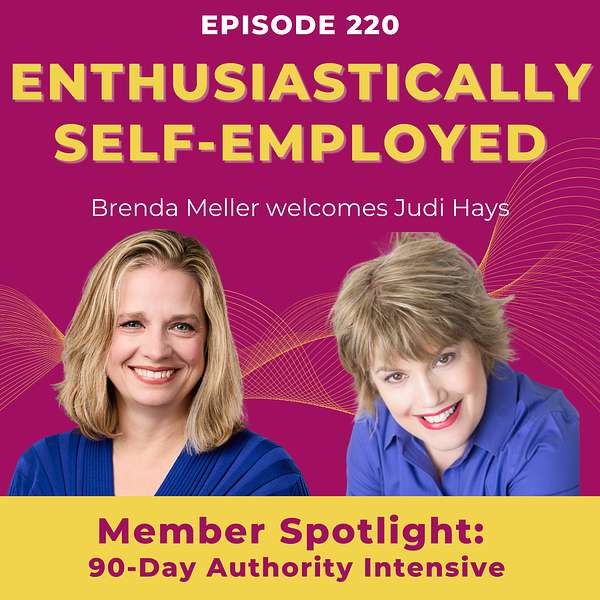
Enthusiastically Self-Employed Podcast with Brenda Meller
In this episode of Enthusiastically Self-Employed, host Brenda Meller spotlights Judi Hays and her 90-Day Authority Intensive. Judi explains how she helps experienced professionals clarify their positioning, build authority on LinkedIn, and turn visibility into meaningful business conversations.
They discuss Judi’s proprietary Triple-E Method from her book Elevate, Expand, Engage, the importance of a credible and aligned LinkedIn presence, and how to use relationships and consistent engagement to create opportunity without losing authenticity.
Episode Key Takeaways
- Position the next chapter clearly: Your LinkedIn profile should reflect what you want to be known for now, not simply summarize the career behind you.
- Work the Triple-E Method together: Elevate your profile, Expand the right network, and Engage in trusted business conversations.
- Use LinkedIn as a relationship database: Identify the people who matter, reconnect with existing relationships, and begin conversations with intention.
- Measure the work by business outcomes: Focus on meaningful conversations, proposals, and opportunities that create a return on the investment.
- Claim a clear niche: A defined specialty makes it easier for the right people to recognize that you understand their business and situation.
- Make your presence credible: Your profile, photo, and the way you show up should match the person people meet in real life.
Watch the Interview
Appearances By

Brenda Meller
Brenda Meller is the host of Enthusiastically Self-Employed Podcast and also facilitates Marketing with Meller (MwM), a membership and learning community for the self-employed. Learn more about Brenda and her Podcast.
Judi Hays
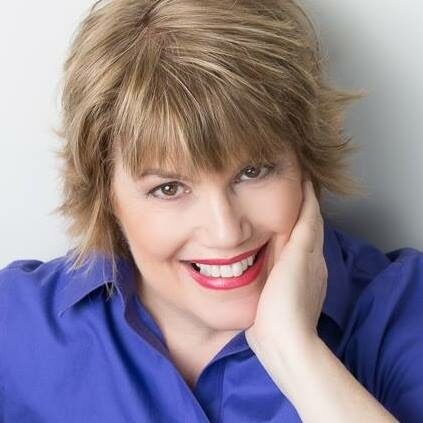
Judi Hays is a personal brand strategist, executive positioning advisor, and LinkedIn expert. She positions experienced professionals and leaders of established, expert-led B2B consulting and professional-services firms for visibility, authority, and decision-maker conversations. Learn more about Judi Hays.
Show Transcript
This transcript was generated from the episode audio and lightly edited to remove filler words and obvious repetitions. It may contain transcription errors.
Brenda Meller:
Welcome, and thank you for joining us. This is our Marketing with Meller member spotlight interview. Today I'll be interviewing Judi Hays. Judi is a member of Marketing with Meller, and I'm delighted to shine the spotlight on her. We'll also take questions from the community at the end. Judi Hays, how are you doing today?
Judi Hays:
I am spectacular. Thank you. I'm glad to be here.
Brenda Meller:
Great. I'm glad to have you here as well. And, Judi, there might be people who are in the room here with Marketing with Meller or maybe listening on the podcast who haven't heard of you, don't know what you do. So why don't you take a minute, give us your introduction. What do you do? Who do you help? Tell us about your company.
Judi Hays:
It's like the question of my life. My company is eponymous. Is that how you say it? It's Judi Hays Inc. What I do is I work with, as I describe them, senior executives who have a lot of experience, who have pretty much identified their whole career with their job title, and now they're at a point where they've either been laid off or aged out or it's just not fulfilling. And I help them make that transition, from, like, going from the corporate world to doing, whether it's fractional or, doing whatever they wanna do in their next. Launching a nonprofit, writing a book. whatever it is, I help them become a visible expert, and I do it with positioning. Positioning to me is: What's your niche? What's your position? As opposed to brand, which is how people perceive you. What is my brand? And that's what people think of when they think of the person. So, it's just working with that. The common thread among these executives is that they work in B2B industries where a high level of trust is required. They sell high-ticket services in regulated industries. So I have clients in supply chain, physical security, healthcare. Those are industries such as supply chain, physical security, healthcare, accounting, and fractional CFO services. They require that level of trust and usually have a longer sales cycle. So it's like, okay, so what do you do over that runway? How do you build that trust? How do you make them visible? How do you make them memorable? So that's what I do in a nutshell.
Brenda Meller:
Wonderful. And I was just poking around off to the side if you saw me looking over there. Yeah. I was, I was thinking, how long have we known each other and have we been friends? We connected actually in 2018. So I think it was at the point where I had recently left corporate, and it was actually January of 2018 when we first connected. I left corporate towards the end of 2017, and the beginning of January was when I decided I'm not looking for a job anymore. I'm fully leaning into Meller Marketing, and I started connecting with people like Judi, people who I saw that were really rocking it on LinkedIn, and I think you were, on the rockstar list that I used to publish as well. Yes. And I feel like that's where, it's really where we got to know each other, and you've been in this, in my mind- I think about Judi as LinkedIn strategy, but also marketing. Yeah. Like, I've always felt like this affinity with you in marketing, and you're also an author. You can see in her background if you're watching us on Zoom, the book is kind of- Wow blurred out in the background. I grabbed my copy of the book in our pre-show interview. It's called Elevate, Expand, Engage, and I'll drop the link into the show notes for those of you who are interested in picking up a copy of that. So, I've always been impressed, Judi, though, with your ability to grow and evolve your business. You've always paid really attention to what the market is seeking, and you've been really savvy at identifying niche industries and audiences that you can uniquely help based on your skills and expertise. So I'm super excited today to learn more about you and your business. In these Member Spotlight interviews, we're learning about you, but I also ask you to pick a product or a service or an offering for us to talk about. So what would you like to talk about today? W-
Judi Hays:
What a great opportunity, and thank you, my co-opetition friend. Those of you have probably heard that word before. what I'd like to talk about today is something that I'm calling the 90-Day Authority Intensive, and that has evolved. And what we were talking about earlier is, a lot of us that work in the LinkedIn space probably do the same thing, but it's how we approach it and who we work with. And the thing that I have found throughout my career, and actually 2018 was a pivotal year, 'cause it was the year that I took my business seriously. In fact, I formed a corporation, and once you form a corporation, you have accountability, and so in many ways, as we know. That was a pivotal year. and at the time, I was working under a company that I then, went off on my own and I was managing a lot of their LinkedIn clients, their clients that wanted to use LinkedIn. Then I went out on my own and started working in a fractional marketing capacity. LinkedIn is not the end game. It is one resource. It does not have to be something you do not look forward to. Use it as a database to find people you want to engage with. Use it as a way of, establishing who you are, and, one of the things I ask people when I do a training is Google your name. And people Google their name, and I say, "Where does your LinkedIn profile show up in that result?" Do it in an incognito browser too so it doesn't know it's you, and nine out of 10 times it's the first or second result. And then I say, "Okay, so click on your profile. What does it say?" And there's so many conversations that get started because I'm honest with people. I said, "I look at your profile. You've got an amazing body of work here. I don't know what the heck you do." Yeah. "What do you do?" You know? And it needs to come across in a quick second, and I bring that back- To, I would say my early career I started in advertising agencies. Direct marketing. And Back then, we were talking about direct mail. It was considered the icky part of marketing. Oh, you do direct marketing, you know? And you do the stuff in the mail or those book clubs. But that really taught me a lot about AB testing, about targeting, about, specific offers. And I thought, that fundamental seven years that I started with Rapp Collins in New York City, which is now Rapp I guess is the agency, was fundamental. And then I continued on and did a lot of different things. But, what I do today in the 90 Day Authority, the reason why it's 90 days is I notice when you have frameworks it makes it easier to digest. So the book title is Elevate, Expand, Engage, right? So what the heck does that mean? Elevate is the visibility. It's like you got. It's your profile. You gotta start with putting on your wardrobe. What do you want to dress to the party, you know? Think of LinkedIn as the big party, right? It's this big networking event. And so elevate your visibility, elevate your presence. Start with that. That's the first four weeks. We work through different aspects of that, and we get into things like. and this is where I bring in the marketing background. I think Keenan popularized the PIC method. So what is the problem that you're ultimately solving?
Judi Hays:
What is the impact that problem has on your business or on your ability to conduct business? And then what is the root cause of that is underlying that? And so when you get clarity on that and you start talking from that language, so it's the language of your prospect or your client, whatever you wanna call them, your decision-maker buyer. But when you get clarity on that and drill down, it's like the five whys, right? Ask why. Why is that a problem? What is the impact? What is causing it? that's where the clarity happens, and then that is what I use for the positioning, you know? and I was thinking of who wrote the book. It was, Trout & Reeves Agency from years ago. positioning is something that what I find is if I think of it as a niche, like I'm positioned to this niche-.
Judi Hays:
I'm aligning with that. But people resist claiming a niche because they worry they will not attract this person or that company. And it's like well wait a minute, if you have a niche, then you're even more desirable. Doesn't mean you can't take on the other stuff. It just means that you get known for that specialty, right? And then in my own evolution, I started out direct marketing. Then I moved into a specialized industry. Then I, when I went on my own, I started doing social media audits.
Judi Hays:
You know? And really understanding audiences and all this other stuff before they shut down all the API access. This was back in the early days of Twitter and all that stuff. Then I moved into digital marketing, online marketing, and social media. When I landed at LinkedIn and said, "You know what? I've been using LinkedIn since 2008." I'm really enamored by it and I'm curious about it. I'd like to reverse engineer it. That became my niche. Yeah.
Brenda Meller:
Then people started to associate Judi with LinkedIn.
Judi Hays:
Well, I hope they're identifying that, right? Right. And so that's how that evolved, but I still get people coming to me for, "Can you help me with this? Can you help me with that?" And if it aligns with what I'm doing, I say, "Absolutely." Yeah. Let's use LinkedIn to find your audience first. Let's use LinkedIn to understand your positioning. so that's kind of how all that evolved. But the second part of the 90 days. The first part is Elevate: the profile. The second part is Expand. And, people don't necessarily make the correlation that you have to. What is it, what was that Glengarry Glen Ross, always be closing. Remember Alec Baldwin?
Brenda Meller:
Yeah. Always be closing. Gap Selling is the name of the book.
Judi Hays:
Yeah. There are a lot of F-bombs if you have ever heard him speak. Okay. And so if you have sensitivity to F-bombs, be prepared. Yeah. but he popularized that or that's his methodology, and he has evolved from that.
Brenda Meller:
Annette said Glengarry Glen Ross was the other person.
Judi Hays:
My point is that ABC is always be connecting. So always be connecting because here's the thing, people change roles. you have the degrees of separation. I think, Kevin, talks about that. Yeah. Yeah. The six degrees of all
Judi Hays:
I did not invent any of this. So, you're on the Expand portion. So that's growing your network. It's also looking at your network. And so we spend four weeks really looking at your existing connections, looking at, who your ideal audience might be, strategies to reach those, strategies to pull in that network and to grow it. Then the third part of the 90-day intensive is, Engage. That could be content, It could be direct messaging. It could be getting people off LinkedIn, and onto a call or into a meeting or something like that. But it's that part. So when you go back to know, like, and trust, I think people have heard the KLT thing, know, like, and trust. So know is elevate is your profile. Like is expand, which is your network. And then engage is the trust, 'cause you build the credibility through the content, the messaging, and how you interact with people. So when you put all those together, then you have a strategy and a plan as opposed to just a pretty profile. So that's why I evolved from just doing the profile transformation to really doing this 12-week intensive. I'm working with a new client right now who is moving from being a CFO to being a fractional CFO, and he has a very clear audience. And it's really exciting helping people that I feel I identify with because. And you mentioned this in one of your posts. I am 66. I was born in 1959, and I am proud of it. I do not hide my age. I am still doing this work, and I am using AI.
Brenda Meller:
Right. All the kids are doing, we're doing it too, Judi. That's true. We're knocking it out of the park.
Judi Hays:
And when I was in school at night, I went to school of visual arts in NYC. I learned how to render type with a ruling pen. I don't know if anyone knows what a ruling pen is, but that's back in the day, which then became a rapidograph, which then became Adobe and all this other stuff. Anyway, but there's that audience that I can really relate to because it's like. And you said it. It, I think it was genetically unemployable. I don't think I would ever be employable.
Brenda Meller:
My podcast was originally called Enthusiastically Unemployable. Unemployable means I have such great enthusiasm for not wanting to be employed by an employer. Yes. But people heard unemployed, and I said, "No. That's not right, so let me rephrase it and call it Enthusiastically Self-Employed." Yes. And that's the name of it now.
Judi Hays:
But I heard someone say genetically unemployable, and I've worked for companies for a long time, but I've had two different businesses, and I do not think I could ever go back to giving up the freedom of having my own business. But it also comes with a crap ton of responsibility. It is a trade-off.
Brenda Meller:
It's not for everyone,
Judi Hays:
Right? Oh, yeah.
Brenda Meller:
Yeah.
Judi Hays:
We all know that here. I could work any 60 hours of the week. You pick.
Brenda Meller:
You have to want it, and you can be. You probably would agree with this too. You can be successful in the first year for just wanting it, but you can't- Sure. really be successful beyond that. Just you have to be successful in delivering value to your customers and, we hear so many stories about the stats of passing the five-year mark and everything, but it sounds like you're really aligning your clients up with strategy going through- this 90-day process.
Judi Hays:
Exactly. What I learned in advertising is to always put myself in the position of the end user- Yeah. or the client or the recipient, and how would I receive that? And then I'm also very focused as a business owner on what's the return on that investment? So the things that I advise my clients to do, I do myself. I pay a coach, you know? I am in membership programs. I do training. But it's like I think that we a lot of times have to walk that talk, and understand that. But if you can really empathize with, switch roles, like how does that come across? Or understand where that struggle is-.
Judi Hays:
Then you can move through that, and it becomes more feasible. But the other part is really the ROI, and what I find is if we focus on our outcome-. instead of a, "Here's what I do," it's like, "No, here's what I deliver."
Brenda Meller:
Right.
Judi Hays:
You know? And so At the end of the program, it does not necessarily end. I have clients who continue on retainer, where we do whatever area of that three phase approach that they struggle with the most. That's where I hold them accountable, and it's terrible working with me when I hold you accountable because -
Brenda Meller:
Right.
Judi Hays:
Right, because we make an agreement. And by the way, I also guarantee the results- Yeah. on that program, okay? Yeah. 'Cause I say to my clients, if you aren't in, and we set the goals in the beginning, but at least three to five conversations or you have SOWs out or whatever it is, if we haven't moved to that point where you're turning your investment into a return- then I'm gonna keep working with you, but the caveat is you gotta follow exactly what I say.
Brenda Meller:
Right.
Judi Hays:
Yeah. If we are not doing it with the necessary velocity and cadence, then I cannot guarantee that.
Brenda Meller:
It's almost like when you go to the doctor and you have some type of an illness or-. health condition, and they're like, "Well, you can be better, but you have to exercise, and you have to eat healthier, and you have to avoid these things- that are triggers for you," and you don't do the things, and you go back a month later, and you say, "Doc, I'm not feeling any better." And the doctor's like, "Did you do these three things?" And you're like, "Eh, one week I did, and then I kinda didn't do." Well- I'm gonna go through the things again, right? There's a, there's a formulaic process to the success, and you've, it sounds like established this for yourself, and you work with many clients over the years. So you're at the point where you're like, "I know this works," but you gotta do it, right?
Judi Hays:
You have to do it. I have also started to have people apply to work with me. I am very selective about who I want to work with. I did spend a month in Spain, in Madrid and Valencia, and I was able to conduct webinars, have client conference calls, even land a new client. And I wanted to prove that I could do that because part of my goal in my, let's call it next chapter, is to be independent, location independent and work.
Brenda Meller:
A Digital nomad I think you were calling it, right?
Judi Hays:
That has been really rewarding. This is fun.
Brenda Meller:
You're doing it right, Judi. And I have to say, like, one of the things I heard you say in there too was your body's kinda like hardwired to working later. I don't know. So what I heard you say is if you're a night owl, you need to move to Spain. I think that was it. I think that was the key takeaway,
Judi Hays:
You know what? I have that imposter syndrome, and one of these days you are all going to figure out I do not know what the heck I am talking about.
Brenda Meller:
All right. We are going to shift over to Q&A, Judi. Sound good? And I'm gonna bring up our first question coming from Liz M. Lopez, and then I'm gonna bring up our second question, too, just because it creates a nice grid of four on here. So Liz-
Brenda Meller:
Hey, Liz. what's your question? Happy Friday. Hey. Hi, Judi. Hi. so it was great to hear about, the background, the focus. I was wondering if maybe you could share, like, a mini case study. Like, give us an example of a client that experienced the program and saw the results.
Judi Hays:
Great. I love questions like that because the proof is in the pudding. I worked with a client who is in supply chain. One of the things we did was when we were going through the second part of the program in the expand part, we looked at his network and I gave him the assignment of picking 10 people out of your entire network. I think at the time he had maybe 1,200 or 1,500 connections. Pick 10 people that know you well enough that if you picked up the phone and called them, they would answer. So we got the list, and then I said, "I want you to reach out to them just to ask them to reengage with you." And so he did, and he sent out the 10 messages. I think he got six responses. One led to a phone call with a past client who was happy to reconnect. He was working at the ideal organization. It was a giant retail organization. He said, "I could really have you guys do an assessment." That was a paid engagement. That led to a seven-figure contract after the assessment was over. So that is the power of, the profile was optimized, and then he had a network that was untapped and it led to a business opportunity. So that's, what. That's been, like, one of the best one. That always warms my heart when something like that happens. first of all, congratulations on that, and second of all, sometimes don't you wish we worked on commission? Right.
Judi Hays:
For LinkedIn, right? I can't tell you. Yes, absolutely. But you know what? No, I feel better when, because- What it is if you're investing in a program with anybody and you leave with like, ", that didn't really move the needle," or, "I don't. that was like a waste of money," versus, "Wow, that works," you know? Then what's gonna happen is you're gonna tell 10 of your friends, right? You are going to talk about it. And so it's much better to, I think, deliver a result and an outcome than to not do that. So yeah, thank you.
Brenda Meller:
Yeah. Wonderful. Thank you, Liz. All right. Moving us along here. We're gonna hear next from Sue Griffey.
Brenda Meller:
Sue. Judi. Yeah, I got a chance to meet Judi in person a year ago May. was just recently thinking about it. But. And we talked about your dog at that time. Before I, ask my question though, that comment you made, women do not fake it till we make it. We don't have imposter syndrome. We are overqualified for most of what we do. So I've been giving you pom-poms. I'm just reminding you that whether you do it for yourself or not, I'll be there doing it. I en- Thank you
Judi Hays:
For that. Thank you I've enjoyed the. Well, I'm older than you. I'm 75. I proudly tout it also. Oh. I just want to make sure that we don't, disappear into someone's idea of you're not worthy, whatever that is.
Judi Hays:
Yeah. Elaine's coming next, so she'll add on maybe. I don't know. My question, and it's more one of interest, you may not even be thinking this way, but it seems to me, because I've done now several, talks that include the idea of fractional roles and part-time roles and what we're all piecing together in portfolio careers, how and in what way are you able to use what you do with apparently very accomplished people that are gonna go forward with you, with the younger generation, with the kinds of habits they are. Are you doing anything or not? I'm just curious about whether you're marketing younger fractional roles or support in that. Maybe you have more than enough business with people that find you or repeat clients. But I was curious. I'm looking a lot at. I work a lot with younger professionals, but, mid professionals don't get to me till they're being senioritis, aged out, you're too old, we don't wanna pay you that much. So I'm curious what you're doing about that.
Judi Hays:
I have not taken on younger clients, meaning those below 40, aside from family members. And, I, 'cause I have a couple of very accomplished nieces and nephews, that have, graduated and now are in the workforce, and they want me to optimize their LinkedIn profile. I tend to work more with that target group, which is 50-plus or 55-plus. It's the seasoned executive that has at least 20 years- They've had an amazing career, have risen to C-suite. That is a niche I can really hone in on. I give presentations to a couple of trade organizations that these people belong to, and that's been a very good source of, my, I guess, inbound leads and things like that. So I become known in that, and so that's why I stick with that. But one thing I was gonna mention to what you said earlier, Sue, in terms of fake it and make it, one thing I learned, I learned a lot in that first job. It was, it was amazing. And one thing I learned is dressing for the part you want to be known for. And so when that opportunity comes up, you are the logical progression. Now, let's take that to LinkedIn. That's what I say about your profile is aspirational. So you wanna make that to be what you want to be perceived at, what you want to be known for, not a rehash of your resume, which is the rear view mirror. And I think that's where a lot of younger people coming into the workforce are. don't really realize, how important that LinkedIn profile is. It's not your grandparents' chamber, of commerce or whatever they used to call it. it really is important. And there was somebody I came across, a client had me work with his daughter, asked me to work with his daughter, and she had created this amazing website and all this other stuff on Instagram. And I said, "Take this and repackage this for LinkedIn because people are gonna be searching for your name." And you definitely don't want necessarily your TikTok feed coming up as much as you want. you wanna be known for something. So that's really, when I'm working with, different people of different, backgrounds, that's what I would tell them. Tell. That is a really good prompt. Thank you.
Brenda Meller:
Thank you, Sue. All right, Elaine, our next and final question. So you mentioned in the very beginning, I think it was, brand versus niche. And, I'm wondering why that is so important to differentiate and how you, how you communicate that to your clients.
Judi Hays:
That is where niche is positioning, at least the way I look at it. It is almost like confusing a goal and a strategy. What's a goal? What's a strategy? When you think of a brand, you associate something with it. and that's where brand loyalty comes in. You don't necessarily find position loyalty or niche loyalty. So when there's a brand. I'm a big, Chewy fan, and they just did it again. They constantly, deliver beyond expectation. And that's a brand to me that I know when I think of that brand or if someone asks me, "Where do I get this?" Chewy's, you know? And time and time again, they deliver on that. A niche, or positioning, is your lane. That's your expertise, and that's, that's really, when you're talking to people, it's easier for them to see themselves in that if you have clarity in terms of the niche, so they're talking to a like-minded or say, "Oh, you get me. You understand my business," or, "You understand my situation." So in my mind, that's how I differentiate it, and I- I'm sure there's other ways of looking at it. But, does that,. I mean, when you think of it, what do you think of, Elaine, the difference of the two? yeah. I think that with a niche, it's your expertise, and brand, I guess, is how you appeal to other people.
Judi Hays:
There is loyalty for brand, and memorability for niche and positioning. you can be visible and not be memorable, but if you're visible and memorable, it's like, "Oh, Brenda, you're the one with the pie." "Yeah." "Oh, yeah, you use the analogies for LinkedIn." "That's right." So then you make that association. So that's not. That is your brand, but it, kinda. It gets a little muddy in that way with brand or, 'cause a lot of people have personal brands or executive brands or, professional brands. but that's. I look at niche as the positioning, and I look at brand as how you are perceived by others. Yeah. Best way to do that is a survey, or a focus group or something like that. Bring people in and ask them, "When you think of, Marketing with Meller, what do you think of?"
Brenda Meller:
Yeah. Yeah. It's,. I did a, I did a post on LinkedIn, it was a while back, I should probably do one again just to test it out, and I might do it again, 'cause I'm inspired by today, saying, "When you think of me, what are the three words and phrases that come to mind?"
Judi Hays:
Eat more pie.
Brenda Meller:
What did you say?
Judi Hays:
Eat more pie.
Brenda Meller:
Eat more pie. Well, it could be three separate, it doesn't have to be one sentence. But inevitably pie will be a part of it, LinkedIn, marketing, you know. I think it is a way of doing a finger test. Like, what does the market know me for? Yeah. And for a while, I was focused on multiple audiences, one of which was job seekers, the unemployed, and I just found it wasn't supporting my business in a way that I needed to continue on, and I decided to move away from that. There's lots of other people supporting that group. so that was no longer a niche that I was specializing in for my services. I'm kind of curious, I have one question to ask you, Judi. In, since you're working with, I'm gonna call them experience-rich candidates, I like that term- Yeah. experience-rich. how often do you come across a profile where they have an outdated photo that's clearly- Oh, gosh. 20, 30? It's tough. And then how do you gently It's always, it's. 'Cause we know why they're doing it, 'cause it's the younger version of them. So how often do you come across it, and how do kind of couch that conversation and advice to update the photo?
Judi Hays:
That's why video calls are handy, because the truth, it's hard to hide on a video call, right? Yeah. it's probably, more common than not, especially for older professionals, because a lot of them, their profiles are dusty. They have not needed to update them because they were not looking for work, so they still have their, college graduation or wedding photo in there or whatever. what I suggest to them is I, and I tell them a story that happened with me. I go from short hair to long hair. There was a time when I had short hair, but my profile photo had long hair. And I remember going to an event, and it was the reaction I got from somebody that came up to me. And they were like, "Oh." They did a stand back, like, "Oh, you look different." Yeah, like, "Oh," yeah. In a different way. You can literally see them doing
Brenda Meller:
The physical reaction.
Judi Hays:
Yes, like, "Oh." And it's that part where that authenticity breaks.
Judi Hays:
Right? Because if you're not who you say you are and then you're showing up differently, it's like, well, how do I know that's really you? Right. It could be your cousin, whatever. So it's when I relate to like that, they're like, "Oh, yeah, I got to get that fixed." One thing I will tell people, and do not use AI to enhance your photos because you are basically giving AI permission and your photo may show up when somebody's asking for, "Give me a group of women in a, in a room at a meeting." All of a sudden we all show up because we put our faces in the AI. Yeah.
Brenda Meller:
Yeah, it's something to think about. So- It's like the melting pot. Whatever you put into it-
Judi Hays:
Oh, gosh.
Brenda Meller:
Can be extracted from someone else with a spoon or a ladle, right?
Judi Hays:
Yeah. Yeah. Trust and credibility happen when you speak the truth, are authentic, and are not trying to be something else. And really, at the end of the day you're gonna work with people that you trust.
Judi Hays:
And that trust is gonna come maybe from other people that have worked with them or the fact that people are. when you talk to them they're the real deal. It's like, "Oh, yeah, you really do know your stuff." that kind of thing.
Brenda Meller:
Yeah. So, - That's my favorite clients, the ones that say, "I heard about you from Elaine Bell Center or Laura Jove" or whoever it was, and they're not shopping around at this point. They're holding out their credit card and saying, "Where can I sign up?" Yeah. 'Cause I've already. you've already been vetted by Sue Griffey, so I know you're good. I know you-
Judi Hays:
I had that happen recently. An organization reached out to me, and they wanted me to be a speaker. And I was like, "Well, how'd you find me?" "Oh, a couple of people recommended you." I was like, "Oh, great." So then I gave a presentation to them. They had me come back, and now they're. we're in conversation to talk about talking at their in-person event in November. That was awesome.
Judi Hays:
You can see how that built up, and they loved the fact that I didn't sell in my workshop. I was like, "No, I would never do that. That's very inappropriate." I want people to leave saying, "Wow, there's a body of information there. I want to know more." Yeah. I want them to be hungry and thirsty. Yeah. as opposed to, "And here's my program." And no, 'cause I don't want to be- Yeah, that can be off-putting. Yeah. be able to. The pitch-slapping stuff is exhausting. So
Brenda Meller:
Anyway, speaking of selling, I am going to pivot us in an appropriate way because we're here on Marketing with Meller, so how do we market ourselves? So we've been talking about- I know. your 90-day authority program, and I asked you earlier how can people- work with you. So let's say there's somebody listening to the podcast that's like, "Oh, I wanna sign up to work with Judi." Yeah. So where should we go to do that?
Judi Hays:
There is a link on my website. And what that does is we schedule, what I call a discovery call. It's a 20-minute call, and, I'm gonna find out three things on that call. I'm gonna find out what is your main goal? What are you trying to accomplish? And then I'm gonna ask you what's getting in the way of that? How come you haven't done that yet? And then I'm gonna find out your urgency. And at that point, and I don't talk about price or anything, it's my way, we're interviewing each other to see if we wanna work together, and at the end of that call if I think I can help them, then I'll say, "Would you be interested in a deeper dive where we can really map out a plan for you?" And at that point, then I'll talk about the pricing. But I don't want people. My mom used to do this. we'd go to a restaurant, and she'd be like shopping the right-hand line of all the prices. And I was like, "Would you just get what you want?" And I finally took her to the Algonquin in Manhattan and I said, "Give me the menu without the prices," 'cause they did that for people. And she's like, "Well, I don't know what to get." I said, "Why don't you get what you want?" So same thing with when you are marketing services, I want people to see themselves in the solution, not be shopping by the price, because the price is really an investment, and if they feel that they're gonna get something out of that, then it's not an expense, it's an investment. So yeah, and then we'll do that in the deeper dive. Yeah. That is how it happens.
Brenda Meller:
Wonderful. That's Great. Well, thank you so much. Judi Hays, and I'm gonna drop her link inside the show notes, so if you happen to be listening to the podcast, I'll drop her LinkedIn URL as well as a link to work with her. And thank you- Thank you. so much, Judi, for being on today.
Judi Hays:
Thank you.
FAQs
The 90-Day Authority Intensive is a 12-week LinkedIn positioning program for experienced executives building a next chapter, whether that means fractional work, consulting, board service, speaking, or another expert-led path.
The work is organized around Judi’s proprietary Triple-E Method from her book Elevate, Expand, Engage. First, you clarify your positioning and build a LinkedIn profile that reflects the work you want to be known for. Next, you identify the right relationships, reconnect with people already in your network, and expand it with intention. Then you create an engagement approach that can include content, direct outreach, and conversations beyond LinkedIn.
The goal is not a polished profile for its own sake. It is a clear plan for becoming visible, memorable, and credible to the people who can create the right opportunities. Learn more about the 90-Day Authority Intensive.
Judi Hays explains that LinkedIn can make your next chapter easier for the right people to understand. For an executive moving into fractional work, consulting, board service, speaking, or another expert-led role, the profile needs to communicate what they do now, who they serve, and the outcomes they create.
It should not read like a résumé from the career that came before. It should make the next chapter visible and credible.
Learn more about the 90-Day Authority Intensive.
According to Judi Hays, a niche is the expertise, audience, or business situation for which you want to be known. It gives people a clear reason to think, “She understands my business.”
Your personal brand is how people perceive you over time. It is built through the experience of working with you, the ideas you share, and the reputation others describe.
Clear positioning makes your niche recognizable. Consistent delivery builds your brand.
Begin with the people who already know your work. Reconnect with former clients, colleagues, and trusted contacts. Ask for a conversation, not a transaction.
Judi Hays describes a client who contacted ten people in his existing network. One reconnection led to a paid assessment and, later, a seven-figure engagement. The opportunity began with a relationship that was already there.
Judi Hays says a credible LinkedIn profile clearly communicates what you do, who you serve, and why your experience matters to that audience. It should also look and sound like the person people will meet in a conversation.
That includes a current photo, specific positioning, and evidence of the work you are known for. When the profile and the real-world experience match, trust develops more quickly.
Learn more about Judi’s LinkedIn Profile Transformation.